"When a candidate is curious, it suggests genuine engagement with your company and interest beyond a paycheck. Curiosity is a great way to predict if a candidate will be willing to learn and grow in their position as well."
While generally true, I think they put on blinders at the end. Some folks display their curiosity through observation more than questioning. Additionally, a candidate may have already satisfied much of their curiosity about a firm and a role by the time they get to the hiring manager, eradicating any curiosity about either, resulting in few or no questions.
The story also suggests,
"Tips for cultivating curiosity at work:
1) Give time and budget to team members who want to learn more about a particular subject or skill.
2) When challenges come up, practice asking questions before throwing out solutions.
3) Take time to get to know your team members on a more personal level by offering optional team lunches and other experiences.
The first is obvious or should be to anyone with a mind to business. The second is little strange. My philosophy is to always ask questions before throwing out solutions. Lastly, it is important to remember that some team members value their privacy above all else. Don't push it.
Got a little award today and posted to LinkedIn, one of the last surviving social media networks, for me. There is a little more freedom to simply posting here though, which is what this blog appears to be slowly transitioning towards.
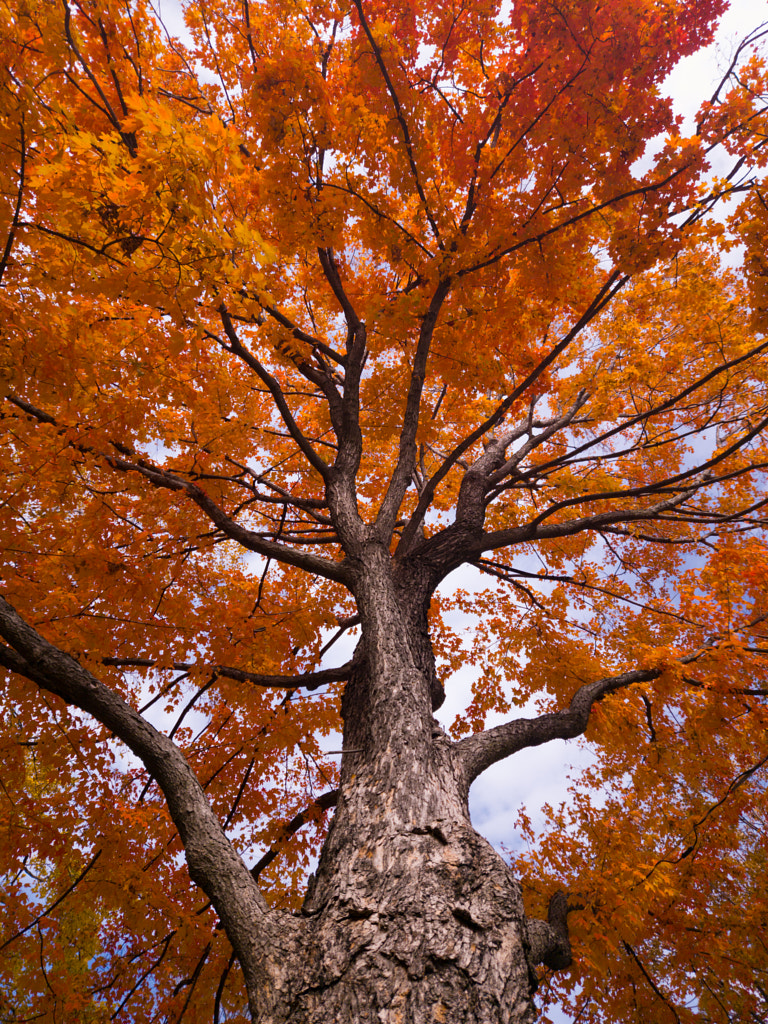
The whole affair took place at one of the ballrooms at Argosy Casino today, just beyond this wonderfully tall tree, lit warmly welcome the season of eating. The associated cheesecake was delicious accompaniment.
Heading south to the Pineville area of Missouri, I stumbled on some long-lost family.
There was also this odd little structure that I am still puzzled over.
I also discovered that bulls are very short and hairy in these parts.
Additionally, I was to beware of Google shortcuts. I don't usually mind, but this really was an unnecessary and unrequested diversion. It was good kicking up a little dust though.
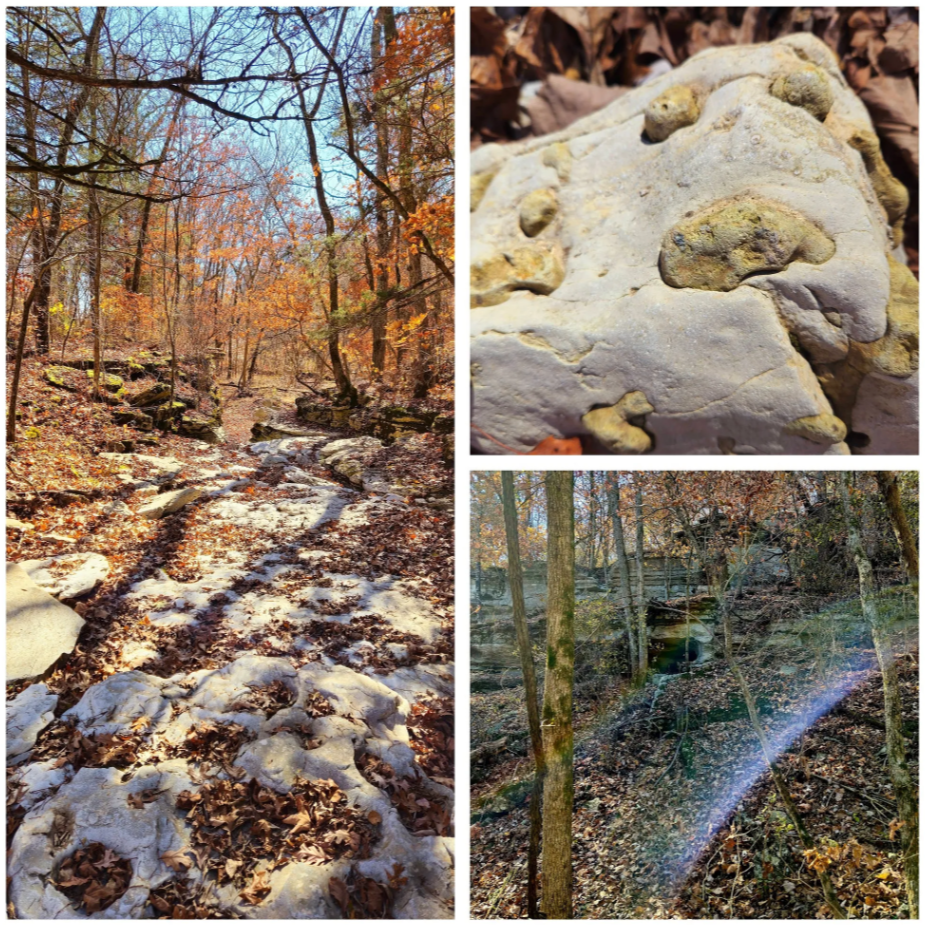
The purpose of the excursion is documented in the following story.
Excepting the random cry from resident avian species, quiet reigns under
clear blue 18 ºC November skies, at Big Sugar Creek State Park and the Elk River
Hills Wild Area, in southwest Missouri.
One can be alone with their thoughts in this space, allowing them to
drift, gently tethered, similar to the wild oats along the banks of now dry
creeks, swaying back and forth on the whims of the breeze. Not another sound
intrudes on the scene, excepting the steady crunch of leaves underfoot, and
their occasional rustling from above.
Small bits of water remaining are crystal clear, reflecting the mostly
naked upper story of this hardwood forest. Ferns cling to life along the creek
banks too, keeping warm under a sun normally much too scorching. A few young
oaks blaze red, and an occasional maple shines yellow; all else is deeply
bronzed or brown. An offhand breeze rises, falling off as quickly, causing
leaves to occasionally shower lightly down.
Packed earth, littered with small gravel is interrupted by layered rock beds
spanning the multiple creek crossings. Outcrops of rock across the hollow
suggest an ancient cover collapse incident throughout the area. Water has been
at work here for a very long time, shaping and reshaping the landscape. While
mostly dry on this date, it is evident that the rainy season hosts an entirely
different landscape.
Rising to the highest point along the trail, the stench of nearby pig farm
drifts into range. The pungent odor is as quickly lifted away by a soft breeze
reaching the crest of this Ozark ridge at the same moment.
Descent in the second half is only somewhat different, hosting much larger
obstacles along the path, which hide under a thick blanket of leaves. It is
wiser to pause to take in a view of the deepening hollow below, than take the
chance of stumbling on one of the numerous complications underfoot.
This stream bed displays evidence of water flowing and pushing through the
landscape with increased determination in this section. Indeed, the tour could
be quite treacherous in the Spring, potentially unpassable. Snarls of trees
remain piled up in places from the last deluge, and further along, gouged banks
snake through, revealing a soil profile unsuitable for much of anything.
While water is in more abundance, it still only stands in pools or
trickles along, though sounding much more dramatic than on the other side of the
ridge, in the persistent silence. A small rock rolling down the hillside, at
first, sounds a boulder crashing through the landscape.
Soaking in the last mile at a slower pace, one creek crashes into another,
mingling and running in different directions. Surrounding rock bluffs and the
beds are more sculpted, and small hollows offer up winter homes to various
critters of the region.
Rising up along a small bluff, then descending again, leads to yet another
seasonal stream merging with another. The glade from which this journey began is
not far beyond that. Voices drift lightly down from above. It is the first sign
of humanity in nearly two hours, at once dreadful and enabling an odd sense of
reassurance at the same time.